Inside the Irish National Youth Assembly on Climate: Students Shaping Ireland's Future
Report by Varvara Vasylchenko and photographs by Yuming Lian, Young Reporters for the Environment delegates reporting for An Taisce from the Irish National Youth Assembly on Climate in Dublin
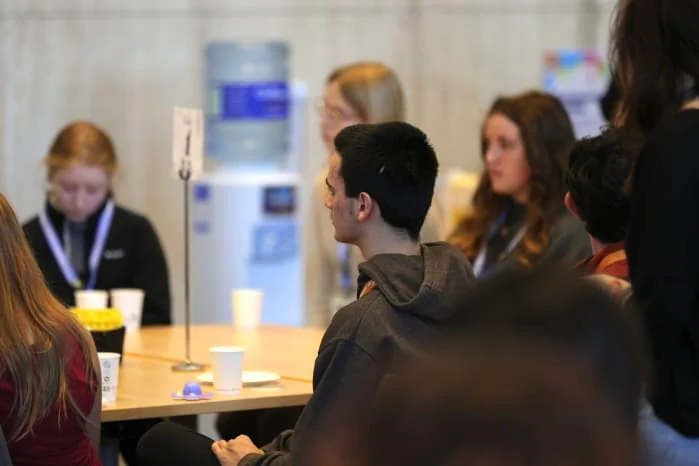
Can you imagine secondary school students giving recommendations directly to the government? For some, this might sound like a scene from an idealistic democracy – and yet, this is neither fiction nor distant vision of the future. This is already a reality in Ireland, where the Department of Children, Disability, and Equality (DCDE) has established a consultative forum for Government departments wishing to get input from children and young people between the ages of 12 and 24 on important topics.
In collaboration with the Department of Climate, Energy and Environment (DCEE), DCDE hosted the fifth annual in-person Irish National Youth Assembly on Climate in Miesian Plaza, Dublin. The timing was on point – the event having been organised for the 13th of October during Climate Action Week.
Having invited 75 young delegates nominated by Comhairle na nÓg (local youth councils) and youth organisations, DCEE provided selected individuals from all across Ireland with the opportunity to inform public policy through proposing collectively developed recommendations to the government officials.
The 2026 Assembly topic was Community Climate Hubs, which could be broadly defined as the platforms or spaces that drive and facilitate targeted environmental action through connecting citizens of different ages and local authorities. At their core, Community Climate Hubs are designed to bring sustainability ideas to life, helping households plan and implement neighborhood-specific strategies for lowering carbon emissions, raising environmental awareness, transitioning to renewable energy sources, supporting the recovery of damaged ecosystems and restoring biodiversity richness.
Ten days prior to the Assembly, the delegates were taking part in an online preparational session, which introduced the context and the necessary background information on the subject. Aimed at ensuring that every delegate entered the Assembly with a clear understanding of what Community Climate Hubs look like in real life, why we need them and what their main goals, functions and delivered initiatives are. The preparational session also provided participants with the opportunity to ask questions related to the topic and share their initial thoughts with each other.
On the day of the Assembly, the delegates joined one of the roundtables based on their geographic residence area type: rural, urban or semi-urban (town). Each group had one facilitator – an experienced adult who coordinated the discussion and helped delegates with recording thoughts. In terms of accessibility, there were fidget toys in a basket at every table.
The first activity began after a pre-word and a quick recap on the background information. In a nutshell, this activity involved brainstorming answers to questions that concerned practical considerations and the optimal format for Community Climate Hubs, as well as how young people could get involved and what could put them off from participating. Then, delegates were invited to review different areas the Climate Hubs could focus on and select three directions they believed should be prioritised. These suggested areas of action – which included climate training, community retrofitting and peer knowledge sharing – were printed on separate paper cards and given to each Assembly participant. After making a choice, the delegates placed cards with their selected priorities on the wall, collectively creating a visual display of young people’s vision for the future of Community Climate Hubs.
The next activity followed a similar format while shifting the focus from what the hubs should offer to how they should operate. Delegates received another set of cards with practical and organisational considerations (such as opening times, transportation, cost, intergenerational involvement) and were asked to arrange them from most to least important on a prioritisation chart, highlighting the factors they believed would be vital in making the hubs accessible and attractive to local communities.
Then, following a group photo and a lunch break, Assembly delegates were sharing and noting down their opinions on three questions: what could the goals of a Climate Hub be, how could young people be encouraged to get involved, and what kind of resources or support youth should be provided with. Having selected three most widely supported answers for each of these questions through voting, delegates had their key points jotted down on a separate sheet, which they afterwards shared with another table before discussing potential challenges together.
After another short activity, Assembly delegates discussed and recorded the main points they wanted to include in their final recommendation – the last step before summarising their discussion into brief and concise advice that one of the delegates from each table presented to Oonagh Buckley, the Secretary General of DCEE.
Speaking of what will happen next, an independent report writer will analyse delegate notes on the paper sheets, posters and placards to write a comprehensive report. “Every Assembly aims to capture what delegates have said on this topic, not just the recommendations,” young people were told at the start of the event. “This is why it is very important that you make sure your opinions are heard by writing them down on sheets throughout the day.”
The Youth Advisory Group (YAG) will review the report as well as approve a plain-English version of the recommendations, both of which will then be shared with all delegates once received by the Department. The report will also be publicly available, published between around the end of 2026 and early 2027.
In addition, there is an online evaluation session scheduled for the 19th of November, during which delegates will get the chance to discuss the Assembly and hear what went well and what could be improved in the future. The report is unlikely to be ready for the evaluation session but delegates will be updated on the progress.
The Irish National Youth Assembly on Climate is one of the great examples of a thoughtfully designed, well-organised way to involve young people in informing government decisions.
It challenges the assumption that influencing public policy is a privilege reserved for adults, as well as reminds us that age should determine the value of someone’s ideas. After all, the decisions being made today will shape the world young generations inherit upon reaching adulthood, so giving them a seat at the table is not simply an opportunity to hear fresh perspectives – it is an acknowledgement that their voices deserve to be part of the conversation.
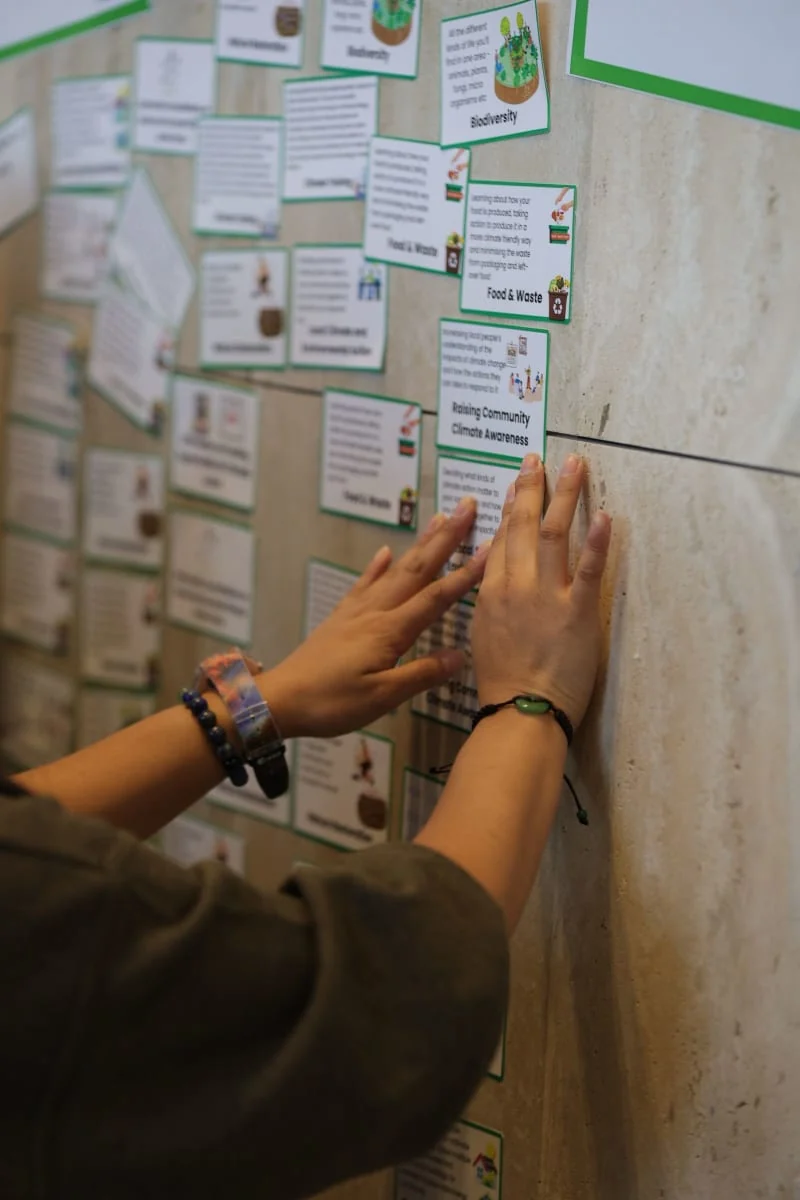
A delegate adds their chosen priority area of action to a collective display reflecting young people's visions on what Community Climate Hubs should focus on.
Photo: Yuming Lian
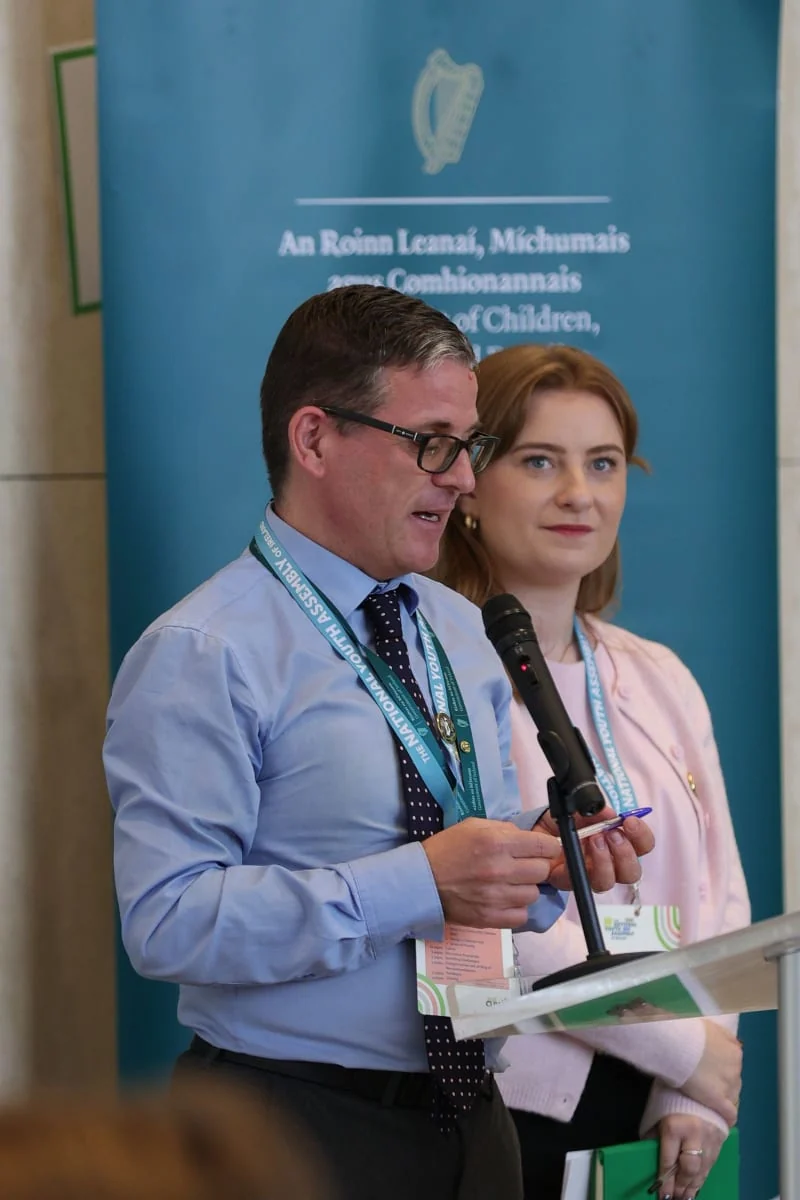
Paul Heffernan from Climate Action and Environment Citizen and Communities in the Department of Climate, Energy and the Environment speaks to delegates at the 2026 Irish National Youth Assembly on Climate.
Photo: Yuming Lian
- Varvara Vasylchenko is Young Reporters for the Environment Campus Category National Winner First Place and Joint National Winner Second Place in the 2026 Competition.
- Yuming Lian is Young Reporters for the Environment Senior Category National Winner First Place in Photography in the 2026 Competition and also Winner in the 2025 Competition when he was nominated to go forward for the Global YRE competition.