Photo Credit: Photo by Eugene on Unsplash
Lazare Eloundou Assomo, Director of UNESCO’s World Heritage Centre has been inundated with reports of the destruction of cultural heritage in many locations across Ukraine. Kharkiv, which is designated a UNESCO creative city, has suffered significant damage. On 10th March, the Board of Europa Nostra declared that ‘the rich and diverse heritage in Ukraine is THE most endangered heritage in the whole of Europe’.
Christianity in Ukraine has a long history. The Union of Brest in 1596 witnessed the establishment of the Ukrainian Greek Catholic Church. The Church, along with its sister church in Belarus, broke away from the Eastern Orthodox Church and entered into communion with Rome. The Orthodox Church remained and still remains the largest congregation in the country with circa 74% of the population as members. Its roots can be traced back to the late 10th century, centred on Kyiv. Its annexation by the Moscow Patriarchate began in the late 17th century. It would be the late 20th century before the Orthodox Church in Ukraine once again gained its independence.
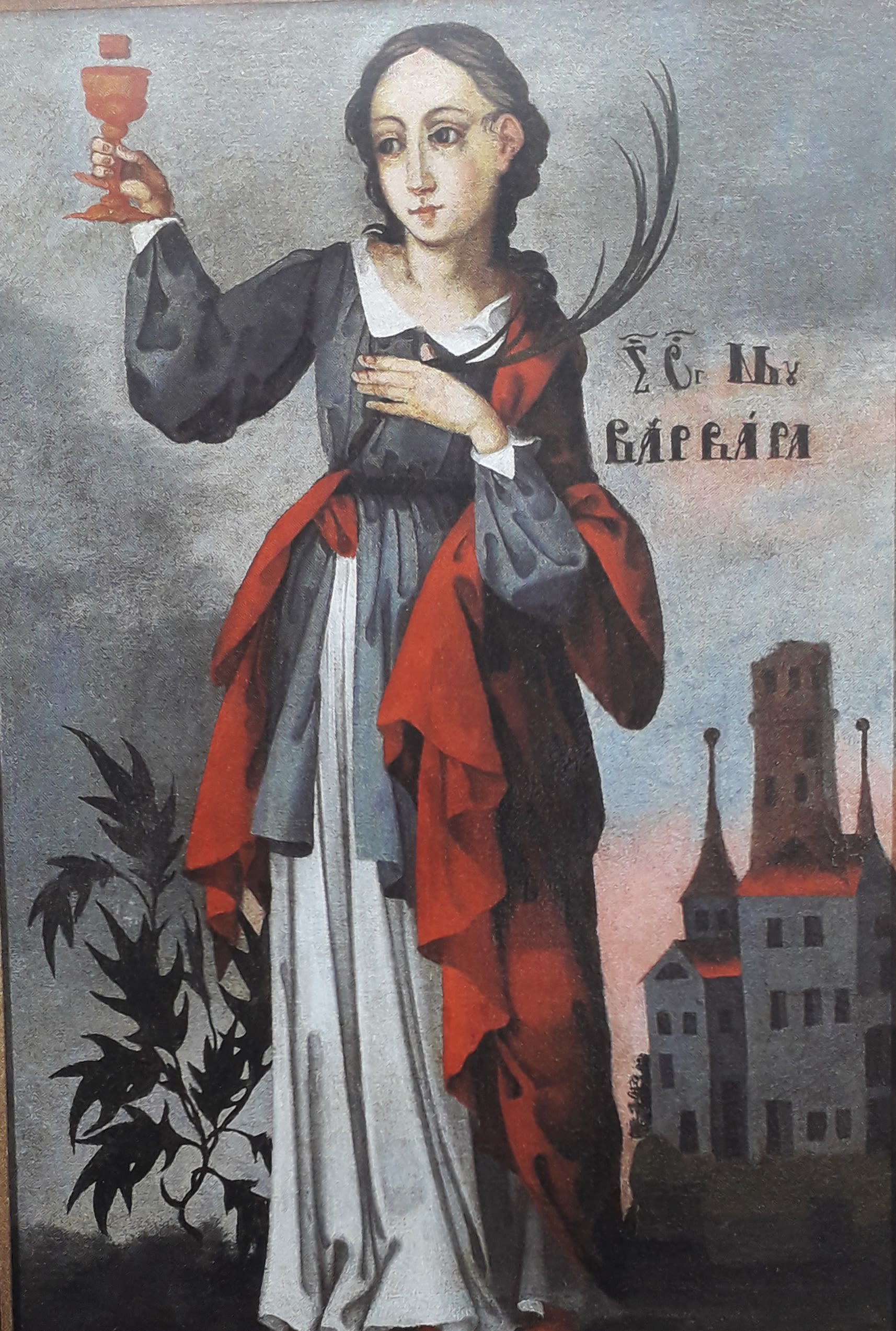
St. Barbara, Second half of the 18th century
The roots of Christianity in Ukraine lay in the Apostolic Age. There is an account of Saint Andrew having ascended the hill overlooking Kyiv (‘St. Andrew’s Hill’). He is reputed to have declared it as being the cradle of Christianity in the Slavic world. The first documented Christian community, however, dates to the 9th century.
In 1949 the Ukrainian Greek Church was ‘annulled’ by the Government of the Soviet Union. It nevertheless continued to function underground. The Catholic Church simultaneously served the spiritual needs of the mostly Polish and Hungarian minorities. Small Protestant minorities are also present in Ukraine, especially in the regions surrounding Kyiv and Odessa.
East Slavs constitute the major ethnic group in Ukraine. Ethnic Russians constitute less than one fifth of the population which also includes Poles, Hungarians, Moldovans, Bulgarians and Romanians. Eastern Ukraine was annexed by the Russian Tsars in the late 17th century.
Cultural assets are now clearly in great peril. As symbols of a separate heritage, they are obvious targets given the agenda of the Putin regime and his agents, not least the mercenaries. The eradication of Ukrainian culture and identity is clearly high on the agenda. As of 30th May, 139 heritage sites had been identified by UNESCO as having suffered verified damage including 62 religious sites and 12 museums. Ukraine’s Ministry of Culture has estimated that as many as 242 Cultural sites and objects have been damaged or destroyed. This is nothing new, during the 1920s and the 1930s the regime in Moscow was responsible for an almost complete elimination of sacred art in central and eastern Ukraine. According to the United Nations Security Council resolution 2347 (2017) this destruction of heritage in the Ukraine constitutes a war crime.
The recent devastation by fire of the 16th century wooden church of ‘All Saints’ at Svyatogorsk Lavra in the Donetsk Oblast region is the most recent casualty to appear on an ever-growing list of desecrated religious buildings. Earlier targets include the Dormition Cathedral (‘Assumption Cathedral’) in Kharkiv which was heavily shelled in March, leaving a debris filled nave, and the Orthodox Cathedral of St. Michael the Archangel in Mariupol which, unsurprisingly, was severely damaged. The Latin Cathedral in Lviv, a Renaissance chapel featuring friezes showing Jesus in the Garden of Gethsemane, and notable stained glass windows, has wisely been encased in sandbags and boarding. The wooden altar-piece from the city’s 14th century Armenian church has been hidden in a bunker.
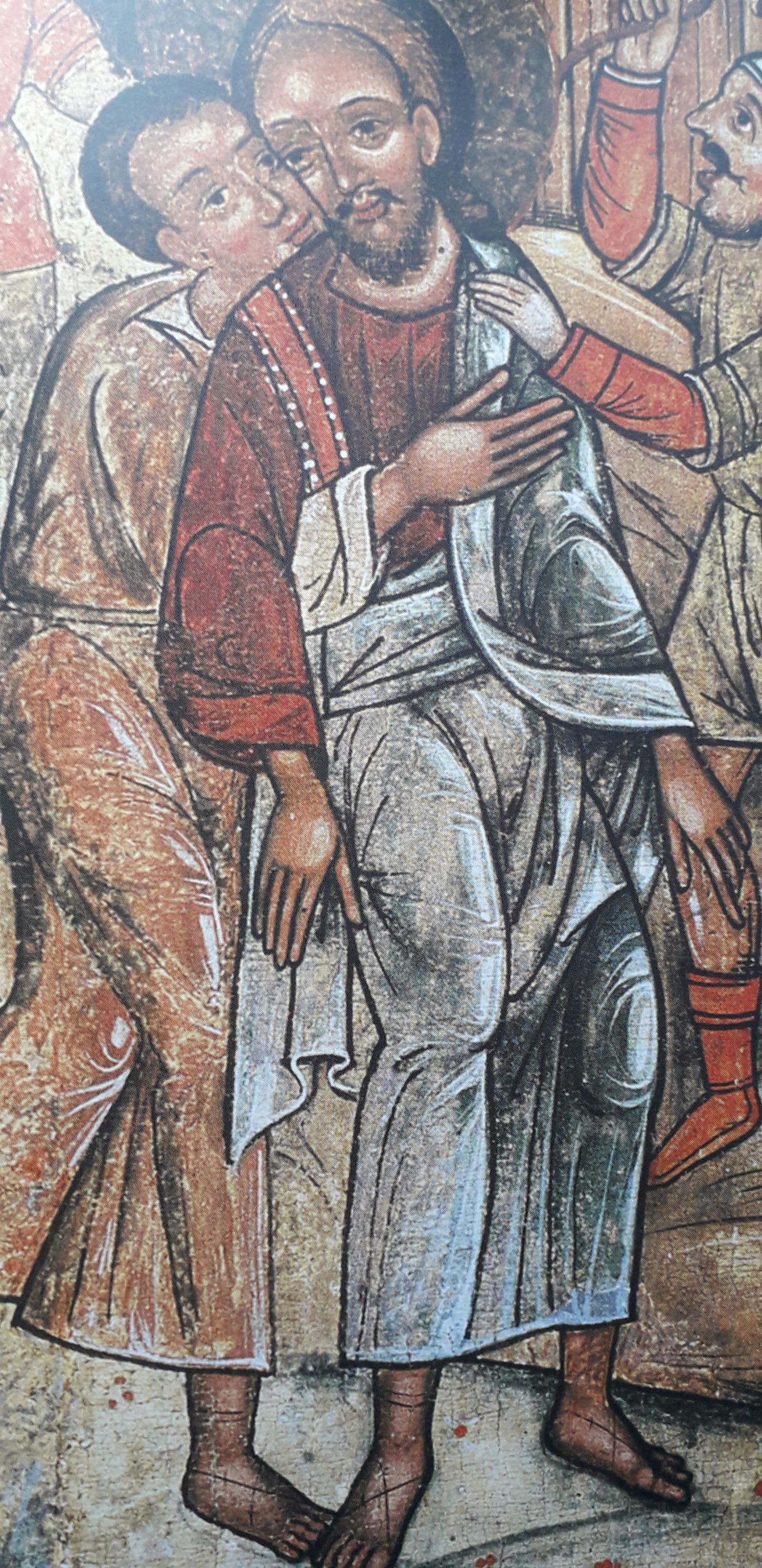
The Kiss of Judas (detail from the icon The Passion of Christ). Second half of the 16th century.
The Historical and Local History Museum in Ivankiv has been shelled. It housed works by the Ukrainian folk artist Maria Prymachenko, a native of the town. Her art was inspired by Polesian folk traditions. Pablo Picasso described her work as an ‘artistic miracle’. Local residents of Ivankiv rushed to fight the fire in the museum. One man entered the burning building and rescued 10 of Prymachenko’s pieces. Works by the artist Hanna Veres were also lost.
Icon painting in Ukraine is over a thousand years old. The resulting assemblage is internationally recognised as a distinctive national art style. From the 13th to the 19th century these works provided a pictorial chronology of the cultural and spiritual shift from standard Byzantine classical styles of iconography to a more Western artistic form. The mid- 16th century in particular witnessed the influence of Western Europe and the Renaissance become pronounced. Professor Myroslaw Tataryn has stated that ‘the icons enable us to study the dynamic by which Ukrainian culture and identity were formed and developed’.
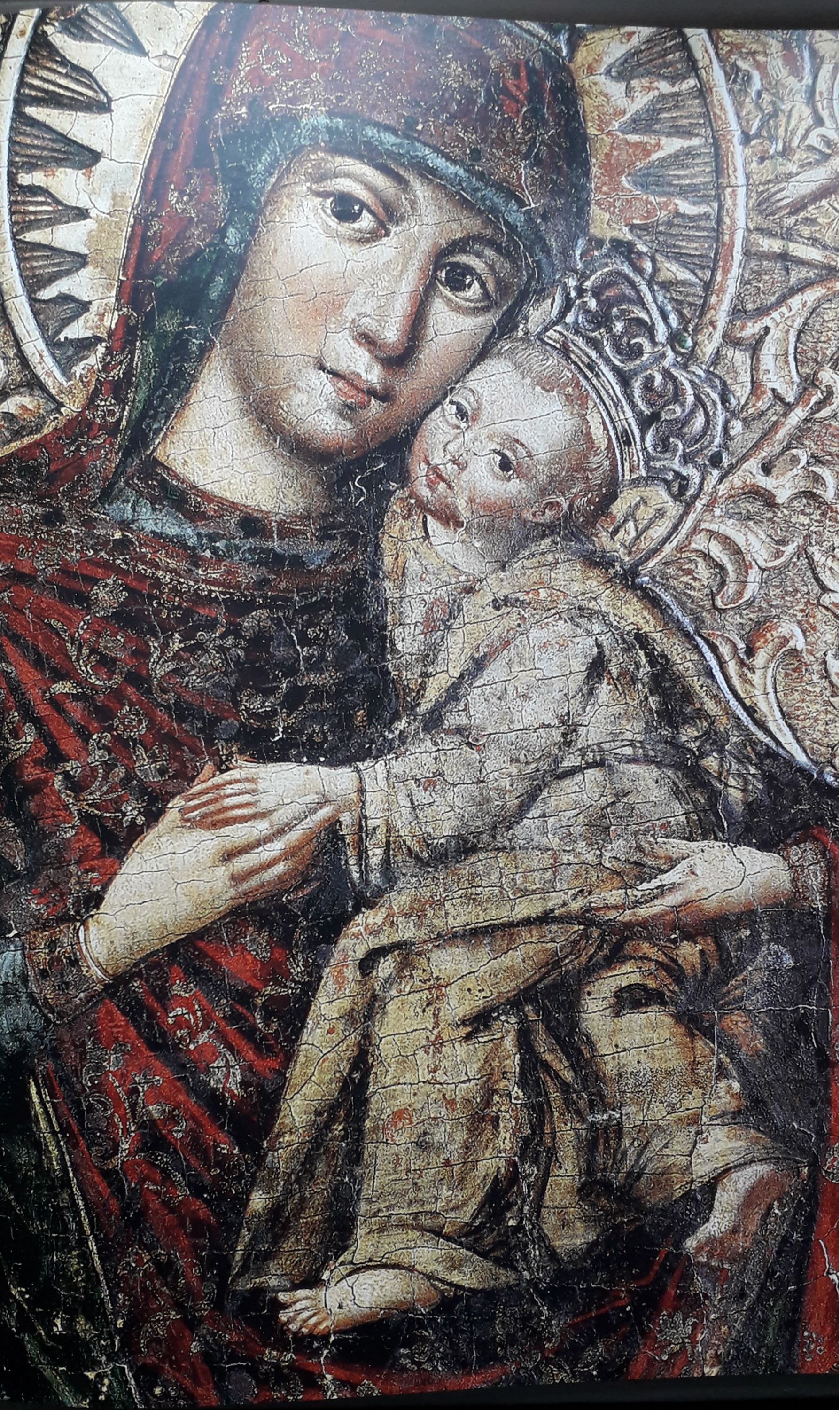
Ivan Rutkovych. The Mother of God Eleusa. Late 17th century.
The many invasions of these lands – by Tatars, Turks, and Russians for example, caused the of many monasteries and churches and their icons. Very few icons from the first two centuries of Christianity in the Ukraine have survived. It was mostly in remote foundations that the surviving examples of these art treasures escaped harm. They constitute an important part of the cultural heritage of Ukraine. It beggars belief that these treasured artefacts are once again in grave danger of being looted or destroyed.
The ongoing daily loss of life, destruction of homes, places of work and worship is appalling. The Cultural Heritage of the Ukrainian people is embedded in the heart of the nation. It must be protected and preserved for the future generations that shall endure and enjoy the peace after the dark storm has passed.
Dr. Mark Clinton,
Monuments & Antiquities.